

We often talk about mattresses, sleep duration, or bedtime routines. Yet one subtle element has a profound influence on sleep quality and how your neck feels when you wake up: cervical alignment during sleep. When the head, neck, and upper back remain in a balanced position, the muscles relax more effectively, pressure is distributed more harmoniously, and recovery becomes more efficient.
By contrast, a poorly supported neck for several hours can lead to tension, morning stiffness, nighttime awakenings, and a lingering feeling of fatigue. It is precisely to address this issue that the Italian artisan workshop Sleepit handcrafts ergonomic pillows that combine traditional know-how with sleep ergonomics research. To understand this approach, you can explore our innovation approach, the work of the Sleepit Lab and the scientific studies that inform the design of our solutions.
In this guide, we will look at why neck alignment during sleep is so important, how to recognize poor support, and which ergonomic solutions to choose based on your profile.
Understanding the natural alignment of the cervical spine at night
The cervical spine is not straight. It has a natural curve, called cervical lordosis, which helps support the head while distributing mechanical stress. At night, this structure should remain as neutral as possible.
In other words, good cervical alignment during sleep means keeping the head in line with the spine, without excessive forward flexion, without tilting backward, and without prolonged sideways inclination.
Why is this position so important?
When the cervical curve at night is respected, the tissues around the neck work less to compensate. The paravertebral muscles, trapezius, and shoulders can release the tension accumulated during the day. This is especially important for sedentary people, seniors prone to neck pain, and also athletes who rely on sleep to recover.
Data from ErgoCert certification shows that a well-designed ergonomic structure helps with:
- maintaining the neck's natural curve;
- better distribution of pressure points;
- reducing morning muscle tension;
- a more stable sleep posture depending on the sleeper's position.
In practical terms, the neck should neither sink into emptiness nor be pushed too high. The right support therefore depends on body size, shoulder width, and the main sleep position.
To further explore how sleep affects overall physical balance, you can also read our article on the physical and physiological effects of sleep.
What happens when the head is not properly supported
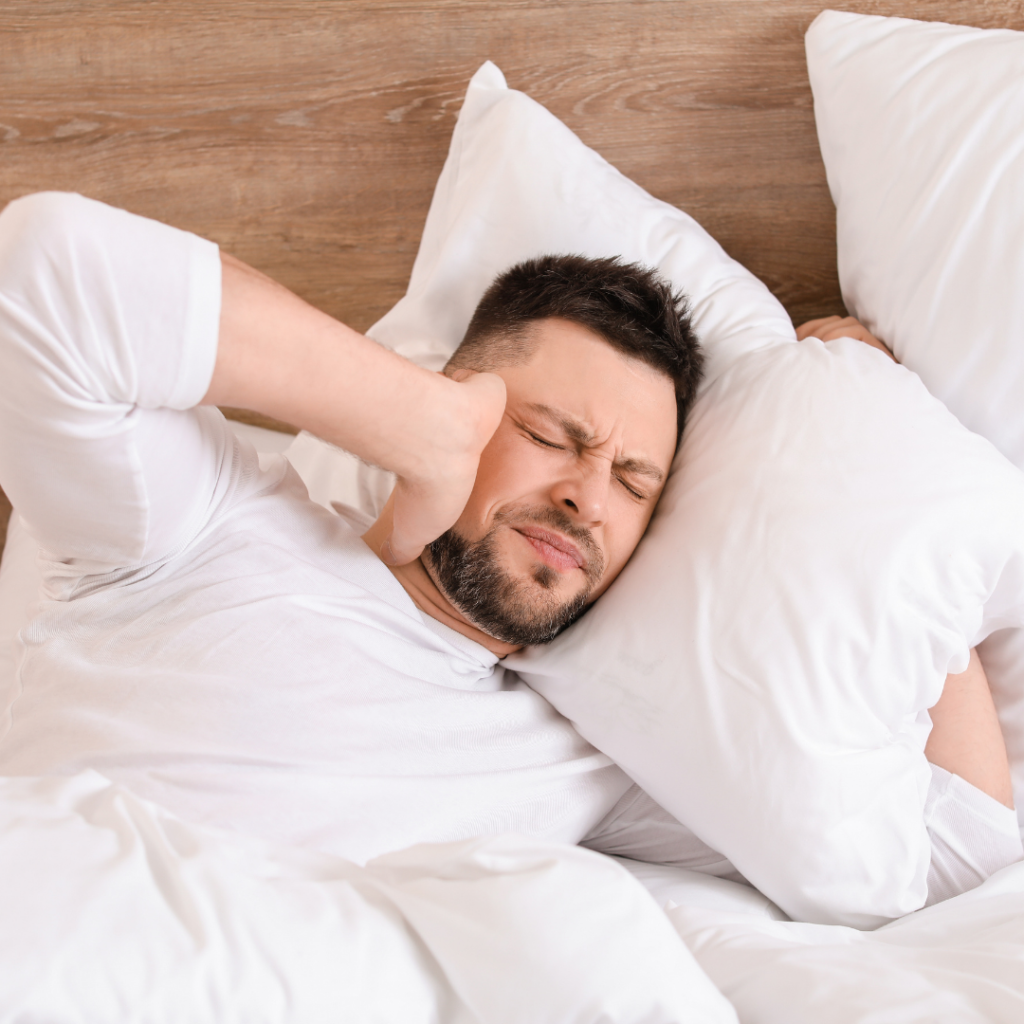
An unsupported head does not always cause immediate pain. Often, the effects build up gradually: a heavy neck upon waking, the need to "unlock" the shoulders, mild headaches, fragmented sleep, or fatigue without any obvious cause.
The main consequences of poor alignment
- Muscle tension: if the neck compensates for hours, the muscles stay partially contracted instead of recovering.
- Morning stiffness: poor nighttime posture can worsen the feeling of stiffness when getting up.
- Localized pressure: an unsuitable pillow concentrates pressure instead of distributing it.
- Nighttime awakenings: the body changes position more often to find a comfortable spot.
- Incomplete recovery: especially for athletes, poor neck support can reduce the quality of deep rest.
A 12-week randomized clinical study involving 120 adults with chronic neck pain showed that a suitable ergonomic pillow reduced neck pain by 62%, compared with only 12% with a standard pillow. Sleep quality also improved significantly more in the group using ergonomic support.
These results confirm a simple idea: neck alignment during sleep is not just a comfort detail, it is a measurable recovery factor.
If you want to better understand the impact of nighttime habits on rest, you can also read our article on the essential need for good sleep as well as our feature on the consequences of sleep deprivation.
The role of the pillow in cervical curvature
The pillow is the direct interface between the head, neck, and mattress. Its role is not limited to providing a soft feel. It must fill the space between the neck and the sleeping surface in order to preserve the cervical curve at night.
Why not all pillows are equal
A pillow that is too flat leaves the neck without real support. A pillow that is too thick pushes the head out of alignment. A model that quickly compresses loses its support function over the course of the night. This is where ergonomic cervical support comes in: a design created to follow the body's shape and provide stable support throughout the night.
At Sleepit, each ergonomic pillow is handmade in Italy by more than 40 artisans. This craft expertise is combined with a scientific approach to sleep: studied shapes, breathable materials, adaptive memory foam, and calibration according to sleep position. You can discover this solution on the Sleepit ergonomic pillow page.
ErgoCert certification highlighted several benefits of a well-designed ergonomic pillow:
- optimal alignment of the cervical vertebrae;
- a 40% reduction in pressure points compared with a standard pillow;
- support maintained throughout the night;
- hypoallergenic properties and materials compliant with European standards;
- adaptation for back, side, and stomach sleepers.
For the most sensitive users, the pillow becomes a true tool for nighttime posture. It is not just about immediate comfort, but about biomechanical consistency over several consecutive hours.
If you want to go further into the brand's scientific approach, consult Sleepit scientific studies and our Innovation page.
Signs of good alignment when you wake up
How can you tell whether your neck was properly supported during the night? The body often sends very clear signals when you get up.
The most common indicators
- you get up without feeling that your neck is compressed;
- you can turn your head easily to the right and left;
- your shoulders feel more relaxed;
- you feel less need to stretch your neck first thing in the morning;
- you have fewer awakenings due to discomfort;
- your head stays naturally stable on the pillow throughout the night.
On the other hand, some signs should raise concern:
- tingling or tension radiating into the shoulders;
- headaches upon waking;
- a feeling of sleeping "broken";
- a pillow you keep folding, pounding, or repositioning;
- pain on only one side of the neck.
For athletes, good alignment can also translate into a feeling of better recovery. Research on sleep and performance shows that appropriate ergonomic support improves perceived recovery, increases deep sleep time, and promotes better physical readiness upon waking. To explore this topic further, discover our article on sleep and performance as well as the one dedicated to muscle recovery.
Ergonomic solutions to choose based on your profile
The right choice always depends on your sleep position, body shape, and specific needs. There is no universal support, but rather ergonomic cervical support adapted to each profile.
Side sleepers
They are often the ones who need the most carefully calibrated height. The pillow should fill the space between the shoulder and the head to prevent the neck from tilting toward the mattress. A stable ergonomic model helps keep a more neutral head-neck-spine axis.
Back sleepers
They generally benefit from choosing a pillow that supports the neck without pushing the head forward. The goal is to support the natural lordosis, not flatten it. A soft feel combined with an adaptive support core is often a good option.
Stomach sleepers
This is the most demanding position for the cervical spine, as it often requires prolonged head rotation. If it cannot be avoided, it is better to choose a low, stable pillow to limit neck hyperextension. A gradual transition to another position may also be beneficial.
Seniors and people prone to neck pain
With age, tissues can become more sensitive to nighttime strain. A certified ergonomic pillow can help reduce pressure and improve supportive comfort. Hypoallergenic and breathable materials are also a real plus for more peaceful nights.
Athletes and people in recovery
After exertion, sleep is a time for repair. Good cervical alignment supports muscle relaxation and contributes to better recovery quality. Strength and endurance athletes alike benefit particularly from support that reduces tension in the upper back and neck.
Parents attentive to family well-being
For many households, better sleep starts with bedding that is more in tune with the body's needs. Choosing a pillow designed with scientific rigor and handcrafted production means investing in a simple daily action that plays a major role in well-being.
To discover a solution designed in this spirit, you can consult the Sleepit ergonomic pillow, as well as the Lab where design, testing, and continuous improvement come together.
In short, cervical alignment during sleep directly influences rest quality, muscle relaxation, and how your neck feels when you wake up. When the head is supported in the right axis, the cervical curve at night is better preserved, pressure is reduced, and recovery becomes more complete.
Good sleep is never a matter of chance. It is born from the balance between tradition, precision, and an understanding of the body. This is the philosophy Sleepit brings to each of its ergonomic pillows, handmade in Italy with artisan standards and supported by sleep science. If you want to sustainably improve your neck alignment during sleep, start by assessing the support your current pillow really provides.


Leave a comment
All comments are moderated before being published.
This site is protected by hCaptcha and the hCaptcha Privacy Policy and Terms of Service apply.